

If you're running an e-commerce business or a lead generation business and you're wondering what conversion rate is, this guide will explain exactly how it works and why it matters.
Understanding your conversion rate is one of the most important parts of digital marketing. It helps you see whether your website is actually turning visitors into customers, leads, or enquiries.
In this article, I'll cover:
What conversion rate means
How to calculate it
Examples for e-commerce and lead generation businesses
How to track conversion rates automatically
Alternative metrics that can also help improve performance
The good news is that once you understand conversion rates properly, it becomes much easier to identify where your website or marketing campaigns need improvement.
What Is Conversion Rate?
A conversion rate is the percentage of users who complete a desired action on your website.
That action could be different depending on your business type.
For example:
E-commerce Businesses
A conversion could be:
A completed purchase
Someone buying a product
A customer completing checkout successfully
Lead Generation Businesses
A conversion could be:
A contact form enquiry
A phone call
A booked consultation
A completed invoice payment
There isn't one universal definition of a conversion. It depends entirely on what matters most to your business.
You can also track multiple conversion types at the same time.
For example, many lead generation businesses track:
Initial enquiries
Qualified leads
Final paying customers
This gives you a much clearer picture of how your marketing performs throughout the customer journey.
Conversion Rate Formula
If you would like to calculate conversion rates manually, this is the formula:

For example:
If you had:
100 sales
1,000 website visitors
The calculation would be:
1001000×100=10%1000100×100=10%
That would give you a 10% conversion rate.
A higher conversion rate generally means your website is doing a good job of convincing users to take action.
Why Conversion Rate Is Important
Conversion rate is one of the best indicators of whether your website or landing page is performing properly.
For example:
A 0% conversion rate means nobody is taking action
A 2% conversion rate may indicate room for improvement
A 10% conversion rate could suggest the page is performing very well
It can also help you benchmark different pages against each other.
You may find:
One landing page converts at 10%
Another converts at 3%
That immediately tells you where improvements may be needed.
Common areas that impact conversion rate include:
Landing page design
Website speed
Trust signals
Product information
Contact form usability
Pricing clarity
Mobile experience
Generally speaking, the higher your conversion rate, the more suitable your website experience is for users.
This is why conversion rate optimisation plays such a major role in digital marketing and PPC campaigns.
Automatically Tracking Your Conversion Rate
The good news is that you don't always need to calculate conversion rates manually.
Many platforms already track this data automatically.
Website Builders With Built-In Tracking
Some website builders already include conversion tracking features, such as:
Shopify
Squarespace
You usually just need to access the relevant analytics section to find your conversion data.
This is especially useful if you're new to digital marketing and simply want to benchmark performance quickly.
Using Google Analytics
Another option is setting up Google Analytics.
Google Analytics is free and provides useful reports such as:
Landing page performance
Traffic acquisition
Lead acquisition
User journeys
Conversion tracking
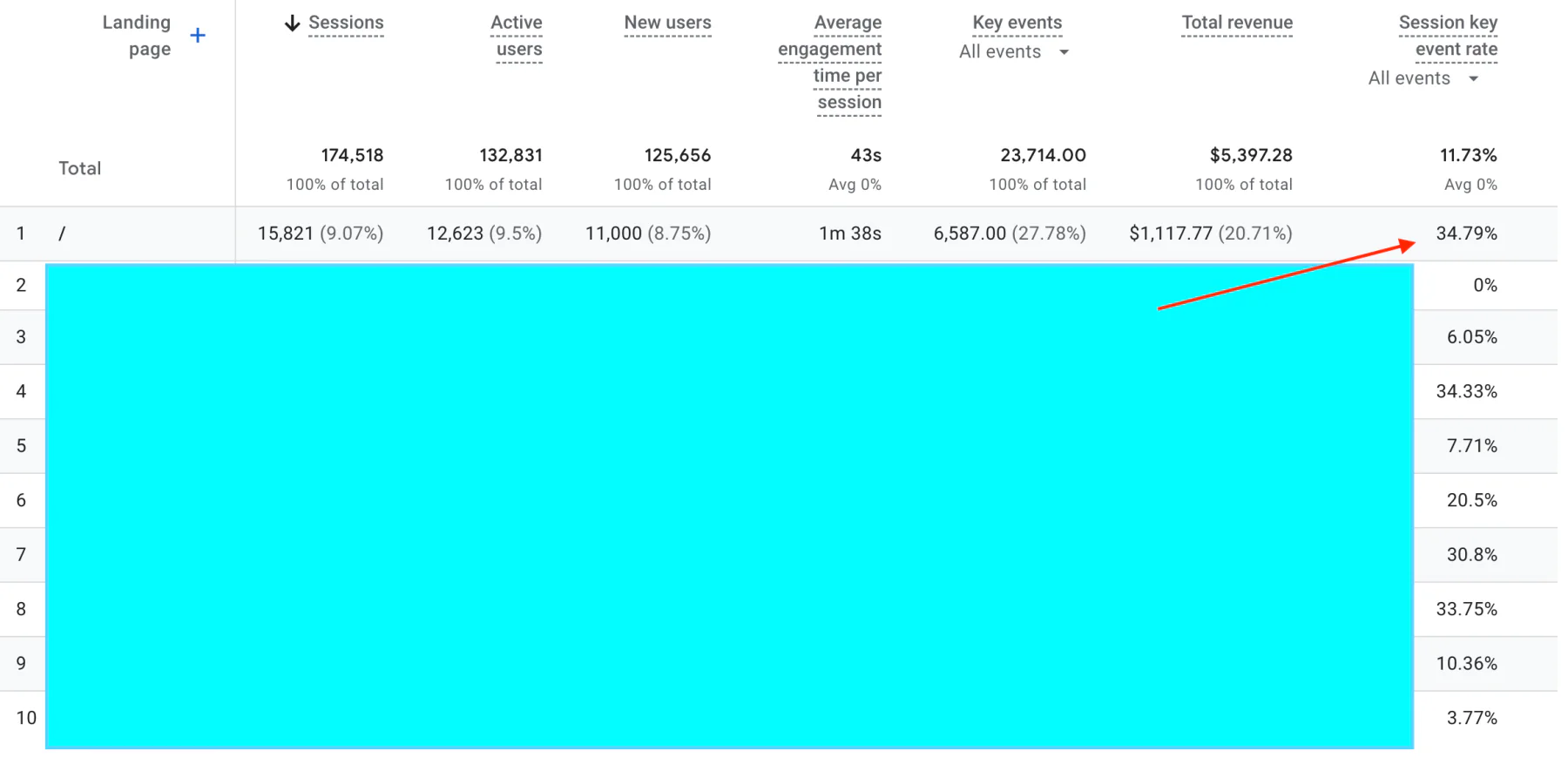
Sometimes conversion rates may be labelled differently depending on the setup.
For example, you may see:
Session conversion rate
Key event rate
Engagement metrics
The important thing is understanding which metric aligns best with your business goals.
If you need help setting up Google Analytics properly, it's something I can help with as part of PPC and analytics setup services.
Alternatives to Conversion Rate
Conversion rate is extremely useful, but it isn't the only metric worth tracking.
Sometimes other measurements can give you even deeper insights into business performance.
Conversion Value Per Page
Instead of only tracking conversions, you can also track how much revenue a page generates on average.
For example:
A page may average £50 per order
Improvements such as upsells or cross-sells could increase this to £60
That extra £10 per order can make a significant difference to total monthly revenue over time.
This is particularly useful for e-commerce businesses trying to improve profitability rather than just increasing order volume.
Things that can improve conversion value include:
Upsells
Cross-sells
Bundles
Higher average order values
Improved product recommendations
Funnel Percentage Rates
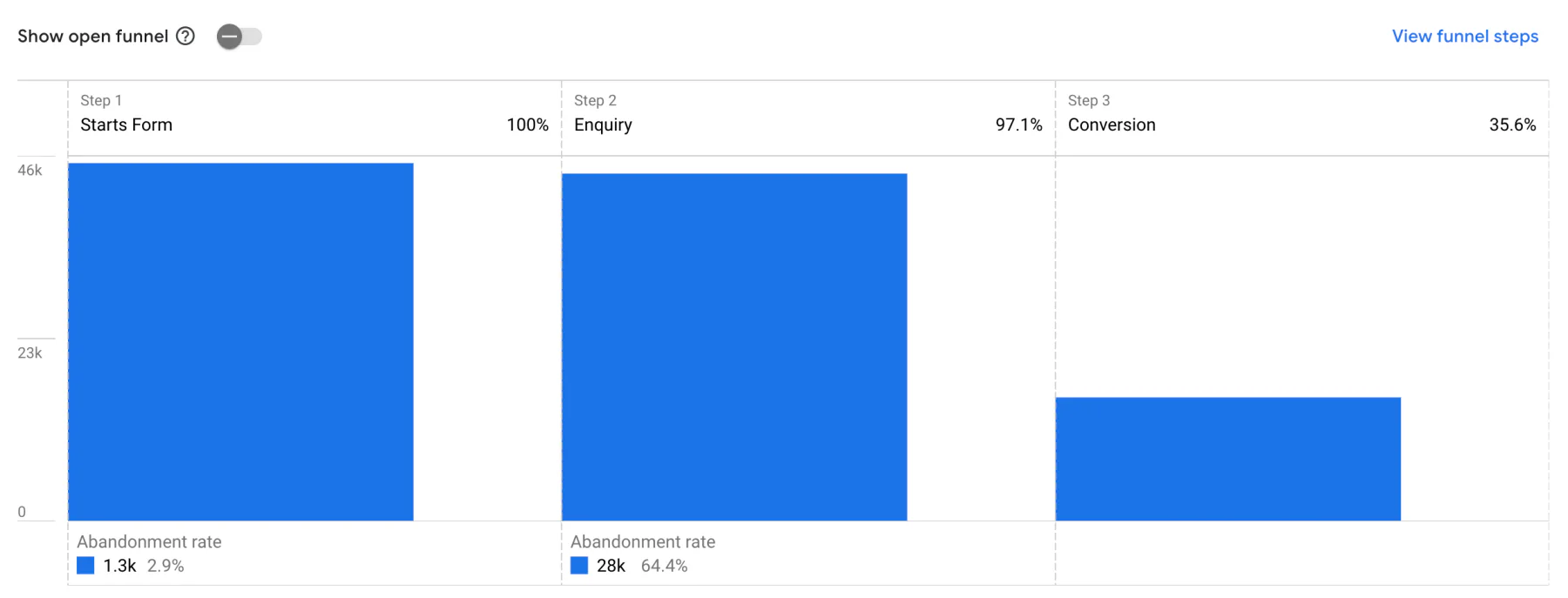
Another useful metric is tracking funnel drop-off percentages.
This helps identify exactly where users abandon the journey.
For example, your funnel may look like this:
Category page
Product page
Add to basket
Checkout
Purchase
By tracking the percentage of users moving between each stage, you can identify weak points in the funnel.
For example:
Lots of users adding to basket
Very few completing checkout
This could indicate an issue with the basket or checkout page.
Potential problems may include:
Confusing layouts
Hidden costs
Typos
Dead links
Incorrect information
Slow loading speeds
Poor mobile usability
Funnel analysis is one of the best ways to identify technical or usability issues that directly impact revenue.
Final Thoughts
Understanding conversion rate is essential if you want to improve your website performance and get better results from your marketing.
Whether you're running an e-commerce store or a lead generation business, conversion rates help you understand whether your website is actually persuading visitors to take action.
It's also important to remember that conversion rate is only one metric. Looking at things like funnel drop-off, conversion value, and customer quality can often provide even better insights.
If you're interested in professional digital marketing management, conversion tracking setup, or improving your website performance, feel free to get in touch via my contact page at jonnyswiftppc.com. I'd be happy to discuss how PPC and conversion optimisation can work for your business.