

PPC for print businesses can be incredibly effective when it's set up correctly. But if it's poorly structured, it can also burn through budget very quickly.
Before moving into PPC and digital marketing, I actually worked within the printing industry for five years. During that time, I later took over the Google Ads account for the business and managed it for two years.
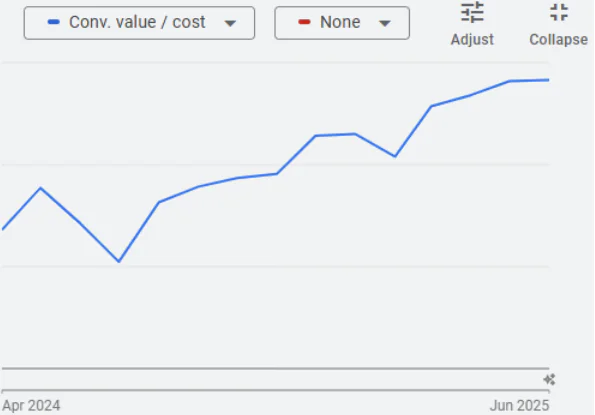
Over that period I was able to significantly improve the performance of the account, generating more orders while making the ad spend far more efficient.
In this blog post, I'm going to outline some of the key things I implemented and learned while running PPC for a print company, and how you can apply the same principles to your own print business.
Consider Hiring a PPC Professional
Although this article will explain how you can run PPC for a print business yourself, it's always worth considering professional help.
Google Ads can be expensive if it isn't set up correctly. Small mistakes in targeting, keywords, or campaign structure can quickly waste budget.
A PPC freelancer or agency can often:
Build campaigns correctly from the start
Avoid common mistakes that drain budget
Improve conversion rates with better targeting
Help you achieve a stronger return on ad spend
In my experience, businesses often spend months testing things themselves before realising they could have saved money by getting help earlier.
Of course, if you're interested in professional PPC management for your print business, you're welcome to get in touch with me via my contact form.
Go After What Is Popular
When running PPC for print businesses, one of the most important strategies is focusing your budget on products with strong demand.
Within printing, many businesses offer a wide range of products. But not every product has the same search volume or conversion potential.
For example, products that typically perform well include:
Flyers
Business cards
Leaflets
Posters
Check out the Google Keyword Planner to see which of your products get the most searches.
These products are searched frequently and often have consistent demand from businesses.
Even though some of these items may have lower order values compared to larger print products, they can still generate a high volume of conversions. That makes them excellent candidates for PPC campaigns.
Other products like:
Custom T-shirts
Roll banners
Exhibition graphics
can still perform well, but they often have higher competition and therefore higher click costs.
If your goal is to maximise conversions for your budget, it often makes sense to prioritise the products where clicks are cheaper and demand is high.
Create Highly Specific Landing Pages
One of the biggest improvements you can make when running PPC for print businesses is creating highly relevant landing pages.
Print customers often search for very specific products.
For example, someone might search for:
Foil business cards
A5 flyers printing
Matte business cards
Same-day leaflet printing
When a user clicks your ad, they expect to land on a page that directly matches what they searched for.
If someone searches for foil business cards, I strongly recommend having a dedicated page specifically for foil business cards.
If a fully separate page isn't possible, then at the very least the landing page should automatically have the relevant options selected so the user immediately sees what they searched for.
This removes friction and confusion.
When customers instantly recognise they're in the right place, they're far more likely to complete a purchase instead of navigating away from your site.
Use Strong Imagery in Your Google Ads
Imagery can play a major role in helping your ads stand out in search results.
Many print companies rely purely on text-based ads, but Google Ads also allows image assets which can improve engagement.
According to Search Engine Land, advertisers using image assets can see around a 6% increase in click-through rate according to Google.
For print businesses, this is particularly useful because printing is a very visual product.
Strong images can showcase:
High quality print finishes
Paper textures
Embossed or foil details
Vibrant colours
These visuals can immediately make your ad more appealing compared to competitors using plain text ads.
Use Promotional Headlines to Stand Out
Your ad headlines are one of the most important elements of any Google Ads campaign.
When people search for print services, they often see multiple competitors offering very similar products.
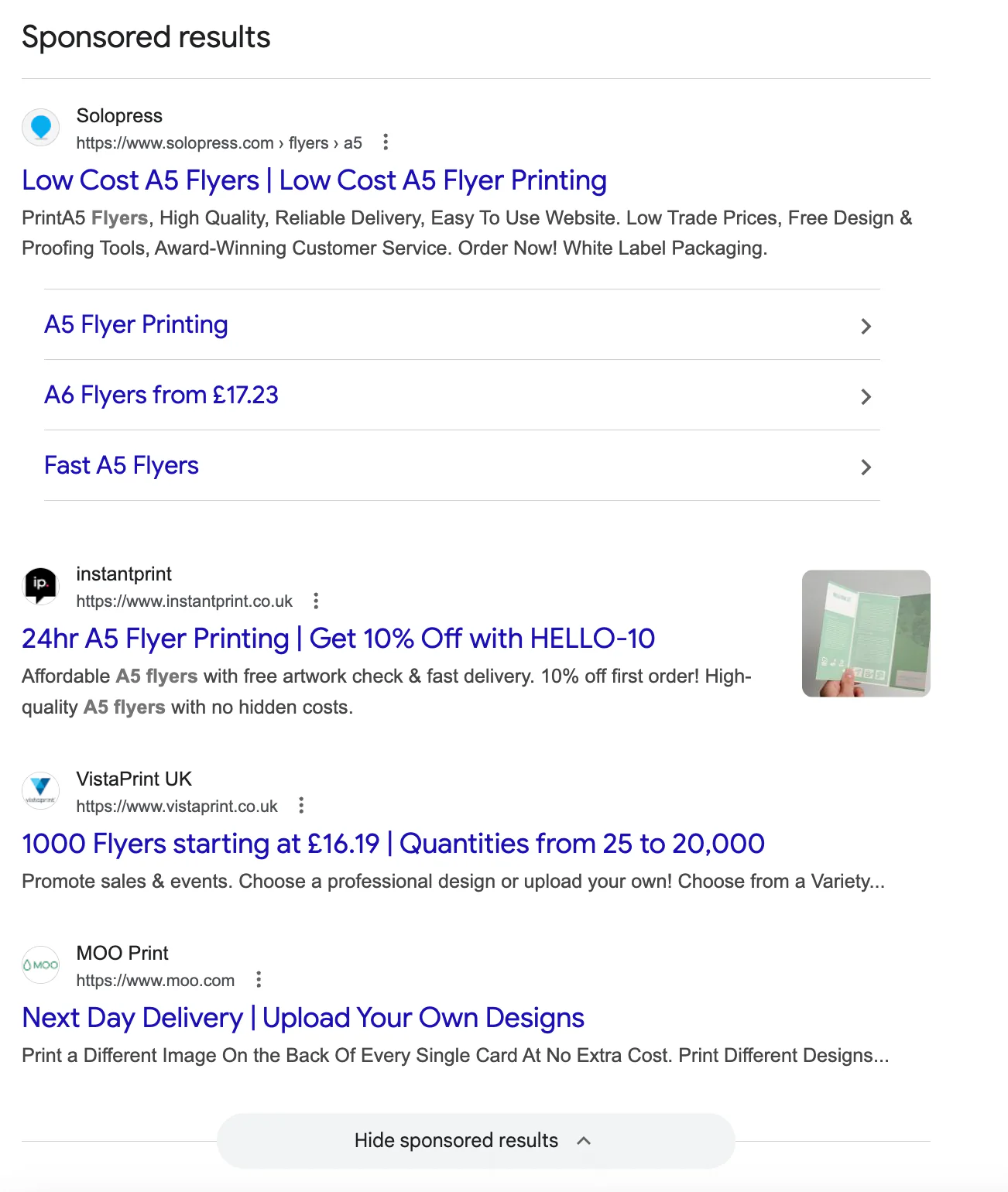
One simple way to stand out is by offering a first-time discount, such as:
10% off your first order
Free delivery on first purchase
New customer discount
Including this offer directly in your ad headline can significantly improve click-through rate.
Yes, this may slightly reduce profit on the first order.
However, in the printing industry many customers place repeat orders. Once they trust your service, they often return for future print jobs.
Because of that, acquiring a customer with a small initial discount can be very worthwhile long term.
Use Ad Scheduling Based on Your Audience
Another overlooked feature in PPC campaigns is ad scheduling.
If your print business primarily serves B2B customers, then it may make sense to focus your ads during working hours.
For example:
Monday to Friday
Roughly 8am to 6pm
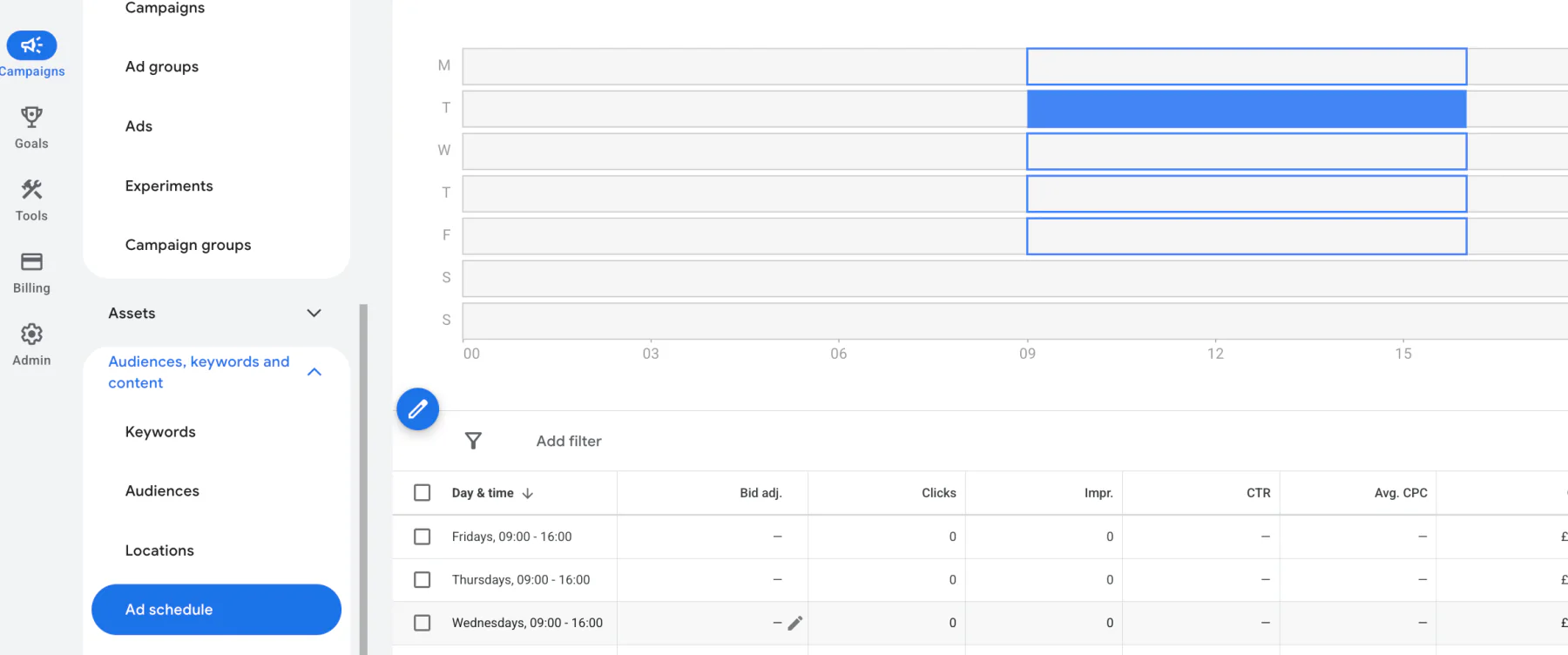
These are the times when business owners and office staff are more likely to be searching for printing services.
However, if you sell products aimed at general consumers such as:
Custom T-shirts
Personalised prints
Event banners
then it might make sense to run campaigns 24/7.
Consumer searches often happen in the evenings or weekends when people are planning events or personal projects.
Adjusting your ad schedule to match your audience can improve efficiency and reduce wasted spend.
Conclusion
PPC for print businesses can be extremely profitable when the campaigns are structured properly.
From my experience working inside a print company and managing the Google Ads account for two years, the biggest improvements came from focusing on a few key areas:
Prioritising high-demand products like flyers and business cards
Creating highly specific landing pages for different print options
Using strong imagery to improve ad engagement
Adding promotional headlines to stand out
Scheduling ads around your target audience
There are, of course, many other factors that can influence PPC success in the printing industry, including campaign structure, keyword strategy, bidding strategy, and conversion tracking.
If you're interested in professional PPC management to grow your print business, feel free to get in touch via my contact page at jonnyswiftppc.com/contact. I'd be happy to discuss how PPC can work for you.