

I always recommend doing proper keyword research for PPC before launching any campaign. It is one of the most important steps if you want to find keywords that are fully relevant to your industry and your service, or even uncover some hidden opportunities that your competitors are missing.
Too many businesses jump straight into Google Ads without checking search demand, competition or intent. That is where wasted budget starts.
In this blog post, I am going to show you how to do keyword research for PPC using free tools, as well as some paid tools I personally recommend that can really sharpen your strategy.
Free Tools for Keyword Research for PPC
You do not always need expensive software to get started. There are a few excellent free tools that can give you solid data and direction.
1. Google Keyword Planner
First of all, it is not called Google Keyword Manager. It is called Google Keyword Planner.
You will find it inside Google Ads. Simply:
Click Tools
Go to Planning
Select Keyword Planner
Click Discover New Keywords
From there, you can type in a relevant query. For example:
PPC freelancer
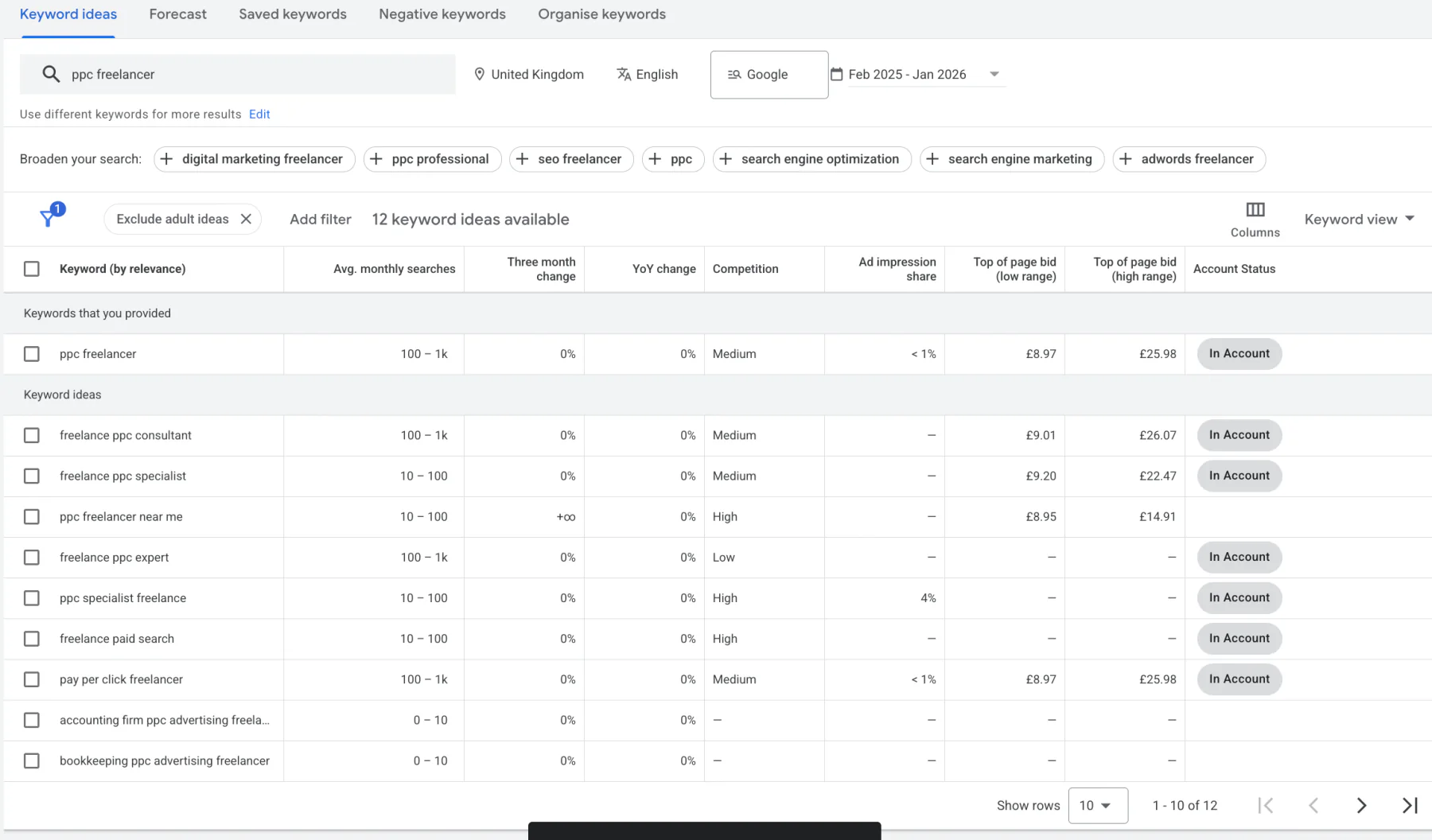
You will then see a list of related keyword ideas along with useful data such as:
Average monthly searches
Top of page bid ranges
Yearly change trends
Competition level
This is essential information.
If a keyword has:
Strong search volume
Commercial intent
Reasonable bidding range
It could be a good candidate for your campaign.
Be careful though. High volume does not always mean high quality. I always recommend focusing on relevance and buying intent first.
2. Competitor Research in Google Search
Another simple but powerful method is manually analysing competitors.
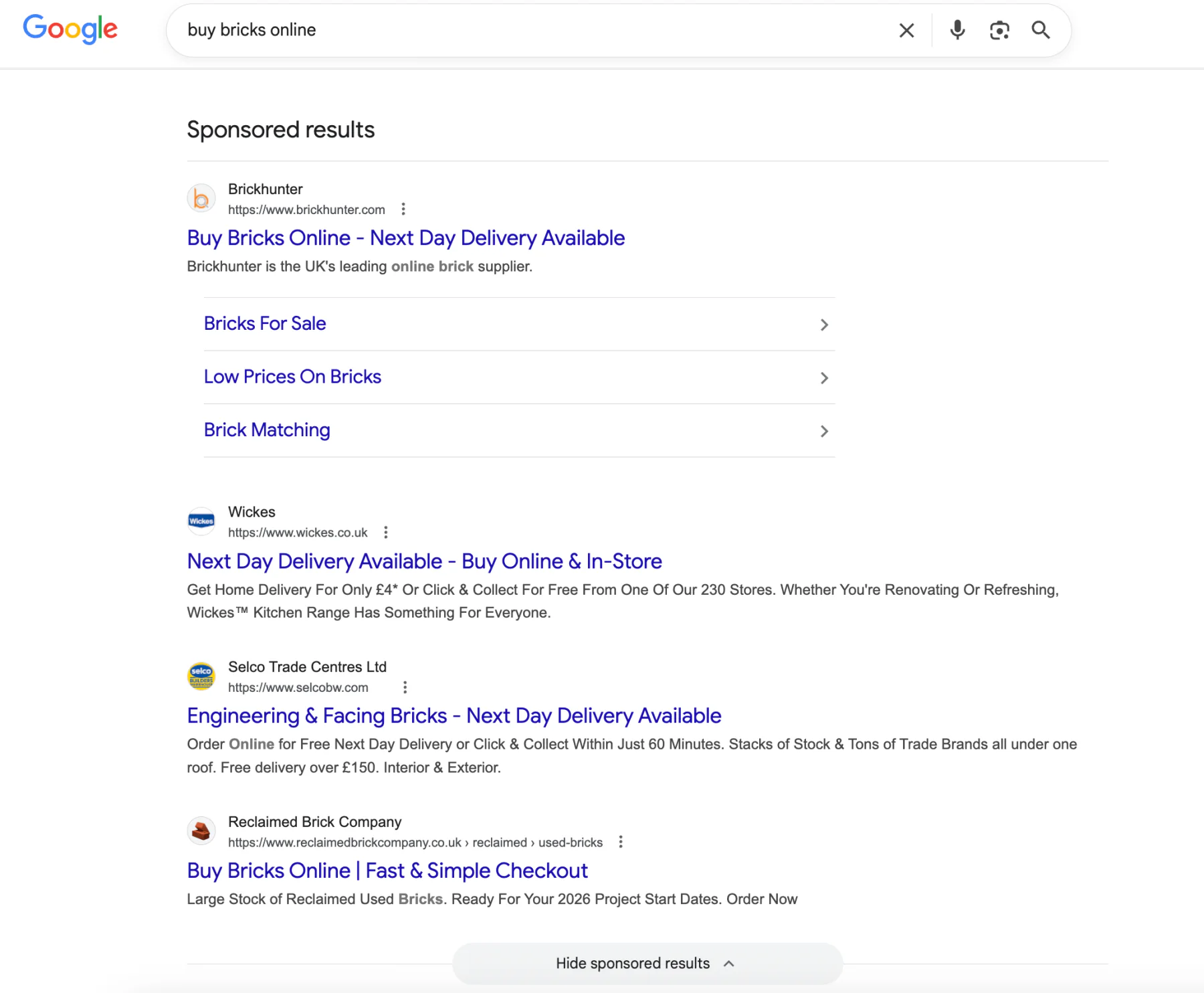
Search for one of your core services in Google. For example:
PPC freelancer
Google Ads management
PPC agency near me
Look at:
The headlines in paid ads
The wording they repeatedly use
The services they highlight
If multiple advertisers are using similar phrases, that is often a good sign those keywords are converting.
It saves you from guessing.
Now, this does not mean you copy them blindly. But it gives you:
Direction
Validation
Market language insights
In my experience managing PPC campaigns, competitor observation is massively underrated.
Paid Tools for Keyword Research for PPC
Free tools are a great starting point. But if you are serious about scaling campaigns or working in competitive industries, paid tools can make a big difference.
Yes, they cost money. But they often save you far more in wasted ad spend.
1. SEMrush
One of the main tools I recommend is SEMrush.
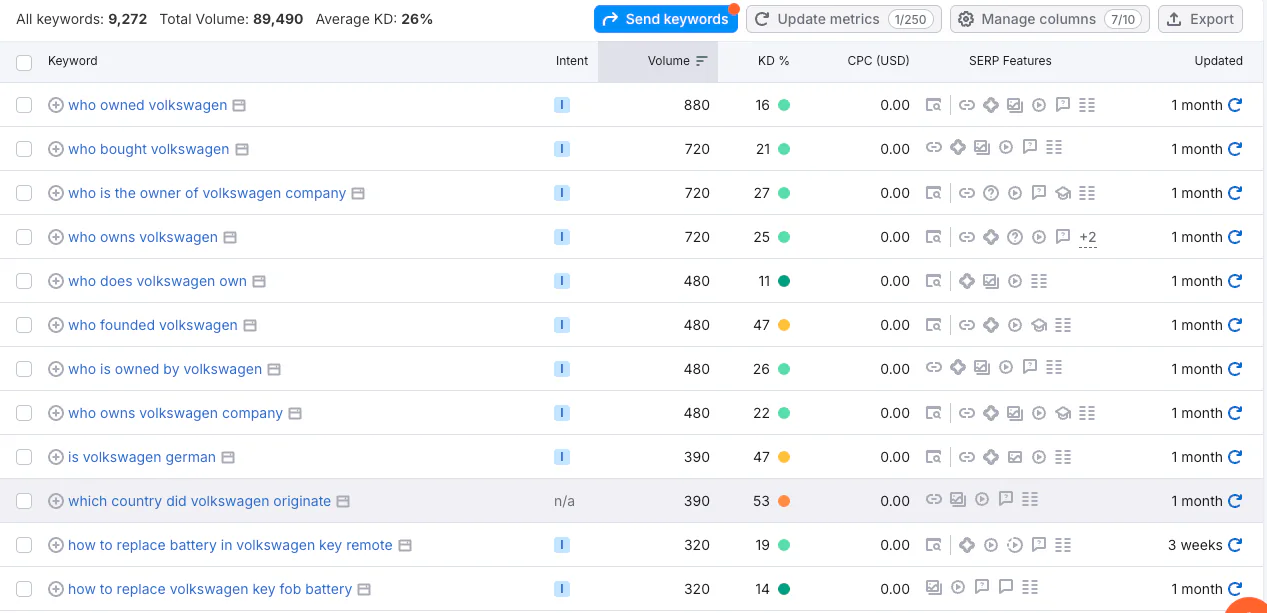
Inside SEMrush, go to the Keyword Magic Tool. Enter your core keyword and explore the Broad Match section.
You will see:
Search volume
Keyword difficulty
Estimated CPC
Variations and related phrases
Question-based keywords
This gives you a much deeper view of how competitive a keyword really is.
For example:
High CPC usually means strong commercial intent
High difficulty means more competition
Lower volume long-tail keywords may convert better
This is how you uncover those “buried treasure” keywords that competitors might be overlooking.
2. Ahrefs
Another strong option is Ahrefs.
Their Keywords Explorer tool works in a similar way. You enter your main term and get:
Search volume
Keyword difficulty
CPC estimates
Click data
SERP analysis
What I particularly like about Ahrefs is the ability to see how many actual clicks a search term gets. Some keywords have high search volume but low click-through because Google answers the query directly.
That is crucial for PPC planning.
How to Choose the Right Keywords for PPC
Once you have gathered your data, the next step is filtering properly.
Here is what I personally look for:
1. Relevance
If it is not directly related to your service, do not bid on it.
Relevance always comes first.
2. Intent
Is the user:
Researching?
Comparing?
Ready to buy?
For PPC, transactional intent is usually strongest.
For example:
“PPC freelancer cost”
“Hire PPC consultant”
These are far more valuable than:
“What is PPC?”
3. Commercial Viability
Look at:
CPC levels
Competition
Your margins
If the average cost per click is £15 but your service only generates small profit margins, it may not work without strong conversion rates.
This is where real-world experience matters.
Keyword research is not just about volume. It is about profitability.
Common Mistakes in PPC Keyword Research
I see the same mistakes repeatedly:
Targeting broad keywords with no intent
Ignoring negative keywords
Not checking competitor positioning
Focusing only on high volume terms
Skipping margin calculations
Keyword research for PPC should always link back to revenue potential, not just traffic.
Final Thoughts on Keyword Research for PPC
If you want PPC to work long term, keyword research is not optional. It is foundational.
Use free tools like Google Keyword Planner to get started. Analyse your competitors. Then, if budget allows, invest in tools like SEMrush or Ahrefs to refine your strategy.
Most importantly:
Focus on relevance
Prioritise commercial intent
Check competition
Protect your margins
That is how you avoid wasting spend and build campaigns that actually convert.
If you're interested in professional PPC management to grow your business, feel free to get in touch via my contact page at jonnyswiftppc.com/contact. I'd be happy to discuss how PPC can work for you.