

Running an e-commerce business can feel frustrating at times. You may already have a decent website, good products, and even some existing sales, but you're wondering how to actually scale things and generate more consistent revenue.
The reality is that growing an e-commerce business usually comes down to getting more qualified traffic to your website and improving how well that traffic converts into sales.
In this blog post, I'm going to explain exactly where I would focus my efforts if I wanted to grow an e-commerce business today. As a digital marketing freelancer with experience working with e-commerce businesses, these are the strategies I genuinely recommend focusing on.
1. PPC Advertising: The Fastest Way to Scale
The first thing I would focus on is PPC, which stands for pay-per-click advertising.
This includes platforms such as:
TikTok Ads in some industries
A lot of e-commerce businesses make the mistake of being too cautious with paid advertising. The reality is that if your products, margins, and website are good enough, PPC can become highly profitable.
The reason I recommend PPC as the number one method for growing an e-commerce business is because it is much quicker than strategies like SEO.
With SEO, it can take months to build rankings and traffic. With Google Ads or Meta Ads, you can often start generating sales within the first few weeks.
In many cases, performance improves over time as campaigns gather more data.
For example:
You spend £50 per day on Google Ads
You sell women's shoes
Your campaigns generate £200 profit
That would represent a 400% ROAS (Return on Ad Spend).
This is why PPC can completely transform an e-commerce business when managed properly.
2. SEO: Long-Term Growth That Builds Over Time
The second area I would focus on is SEO, which stands for search engine optimisation.
SEO is all about improving your website so that it appears higher in Google search results.
Unlike PPC, SEO takes time. However, the long-term benefits can be huge because you are building organic traffic that doesn't require paying for every click.
The basic principle of SEO is improving pages so they better match what people are searching for.
This can include:
Optimising page titles
Improving category pages
Adding FAQs
Writing useful product descriptions
Improving internal links
Creating blog content
For example, if you sell luxury pens, you should have a dedicated category page focused around terms like:
Luxury pens
Premium pens
Executive pens
That page should clearly show Google and users that you genuinely specialise in that area.
Prioritise Your Most Valuable Pages
One mistake I see regularly is businesses spending too much time on low-priority pages.
Instead, focus first on:
Product pages
Category pages
Best-selling products
These are the pages that directly generate revenue.
Blog posts are useful too, but your money-making pages should usually come first.
3. Set Up Google Merchant Centre
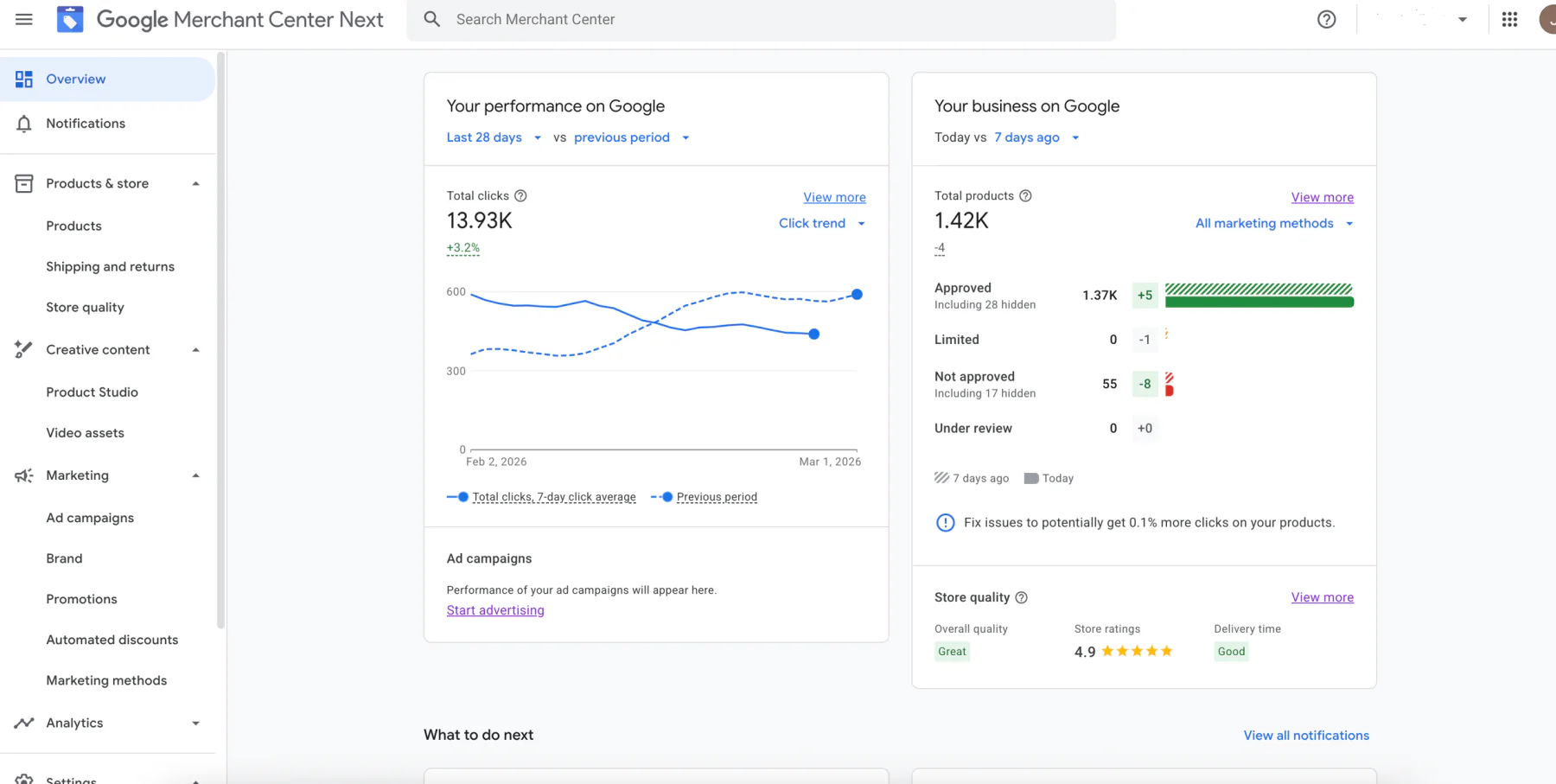
Google Merchant Centre is one of the most important free tools available for e-commerce businesses.
It allows your products to appear on:
Google Shopping
Free product listings
Shopping campaigns (Google Ads)
Performance Max campaigns (Google Ads)
For many searches, Google Shopping results appear right at the top of Google.
That means your products can be seen before standard search results.
Merchant Centre is essentially how you feed your products into Google's shopping ecosystem.
The good news is that it is completely free to set up.
There is really no downside to using it.
4. Build a Relevant Social Media Presence
Social media can sometimes be harder to measure compared to PPC or SEO, but I still believe every e-commerce business should have some sort of social media presence.
The key is making content that appeals to your target audience.
For example:
If you sell dolls, create content showcasing:
Different collections
Product close-ups
Customer reactions
Behind-the-scenes videos
New arrivals
People are not always ready to buy immediately.
Sometimes social media simply keeps your brand in their mind until they are ready to purchase later.
It can also help generate viral exposure if a post performs well.
Focus on Relevance, Not Vanity Metrics
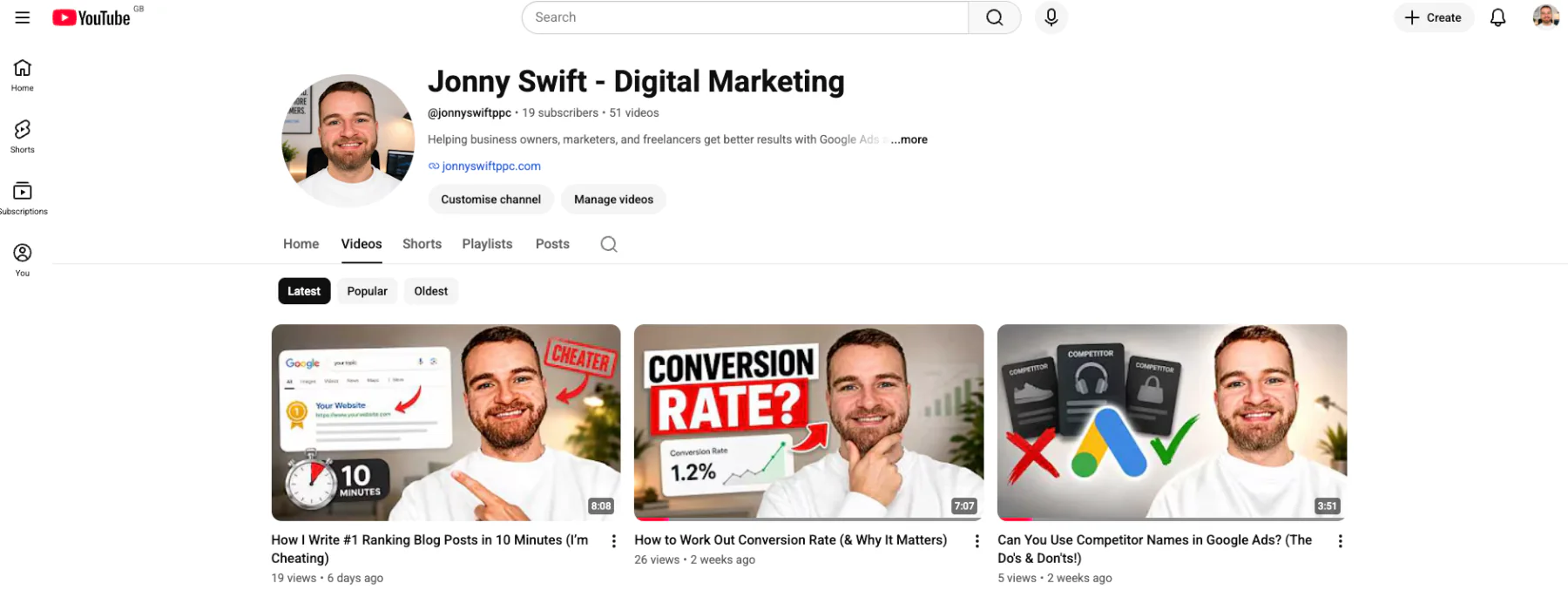
One important thing to understand is that millions of views do not always equal sales.
I focus my own social media efforts on reaching the right audience rather than chasing huge numbers.
Relevant engagement is far more valuable than random traffic.
5. Sell Through Multiple Channels
A lot of businesses rely entirely on one platform.
That can be risky.
If your products are suitable for platforms like Etsy, Amazon, eBay, or Not On The High Street, it often makes sense to list products there as well.
Additional channels can help:
Increase visibility
Generate more sales
Reduce reliance on one traffic source
Reach new customers
But Still Build Your Own Website
Even if you mainly sell through Etsy or marketplaces, I strongly recommend building your own website as well.
Your website gives you:
Full control
Better branding
Stronger long-term growth
Better SEO opportunities
Customer ownership
Google is still the number one place people go to find products and businesses online, so being visible there is essential.
6. Don't Ignore Other Marketing Channels
There are also several other methods that can help grow an e-commerce business over time.
These include:
Word of mouth
Affiliate marketing
Influencer marketing
Email marketing
Referral schemes
Sometimes a recommendation from the right person can massively increase trust and sales.
Influencer marketing in particular can work well for visual products and lifestyle brands.
The important thing is not relying entirely on one strategy.
The strongest e-commerce businesses usually combine multiple marketing channels together.
Conclusion
Growing an e-commerce business usually comes down to increasing visibility, improving conversions, and building multiple reliable traffic sources.
If I were starting today, I would focus heavily on:
PPC advertising for quicker growth
SEO for long-term traffic
Google Merchant Centre for product visibility
Social media for brand awareness
Expanding into additional sales channels
The businesses that normally perform best are the ones consistently investing in digital marketing over time rather than relying on a single source of sales.
If you're interested in professional digital marketing support for your e-commerce business, feel free to get in touch via my contact page at Jonny Swift PPC. I'd be happy to discuss how digital marketing can help grow your business.