

A landing page conversion is really important to drive orders and revenue within digital marketing. Improving your landing page conversion and understanding it could help get more orders on your website, but what exactly is a landing page conversion and how can you improve that within your digital marketing?
This blog post is going to tell you exactly what it is, what you should expect, and how you can improve it.
What Is a Landing Page?
To start with this, we need to understand what a landing page is.
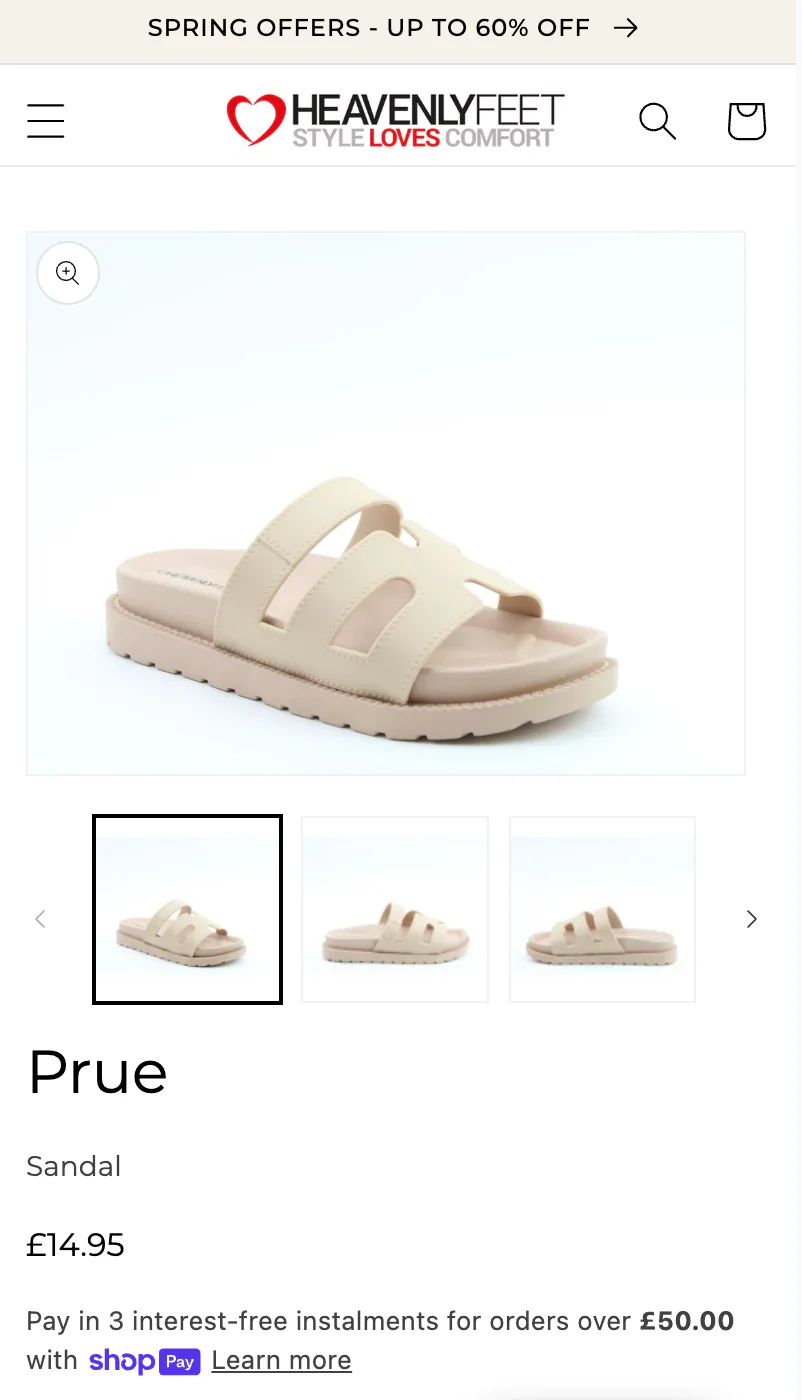
A landing page is a specific page on the website designed to cater for a service or product. For example, if you sell women’s shoes and you also sell sandals, you would have a landing page that directly sells sandals and shows all your products related to sandals rather than anything else.
This page is customisable and should be fully focused around that product or category.
You can also have service-based landing pages. For example, if you are a film production company, you might offer wedding films. You could then build a dedicated landing page completely around wedding videography services.
The main thing around landing pages is relevance.
Once somebody lands on the page, they should instantly know they are in the right place. This makes them far more likely to make a purchase or enquiry.
If you do not have these pages, customers can easily get confused, lose direction, and potentially go to a competitor instead.
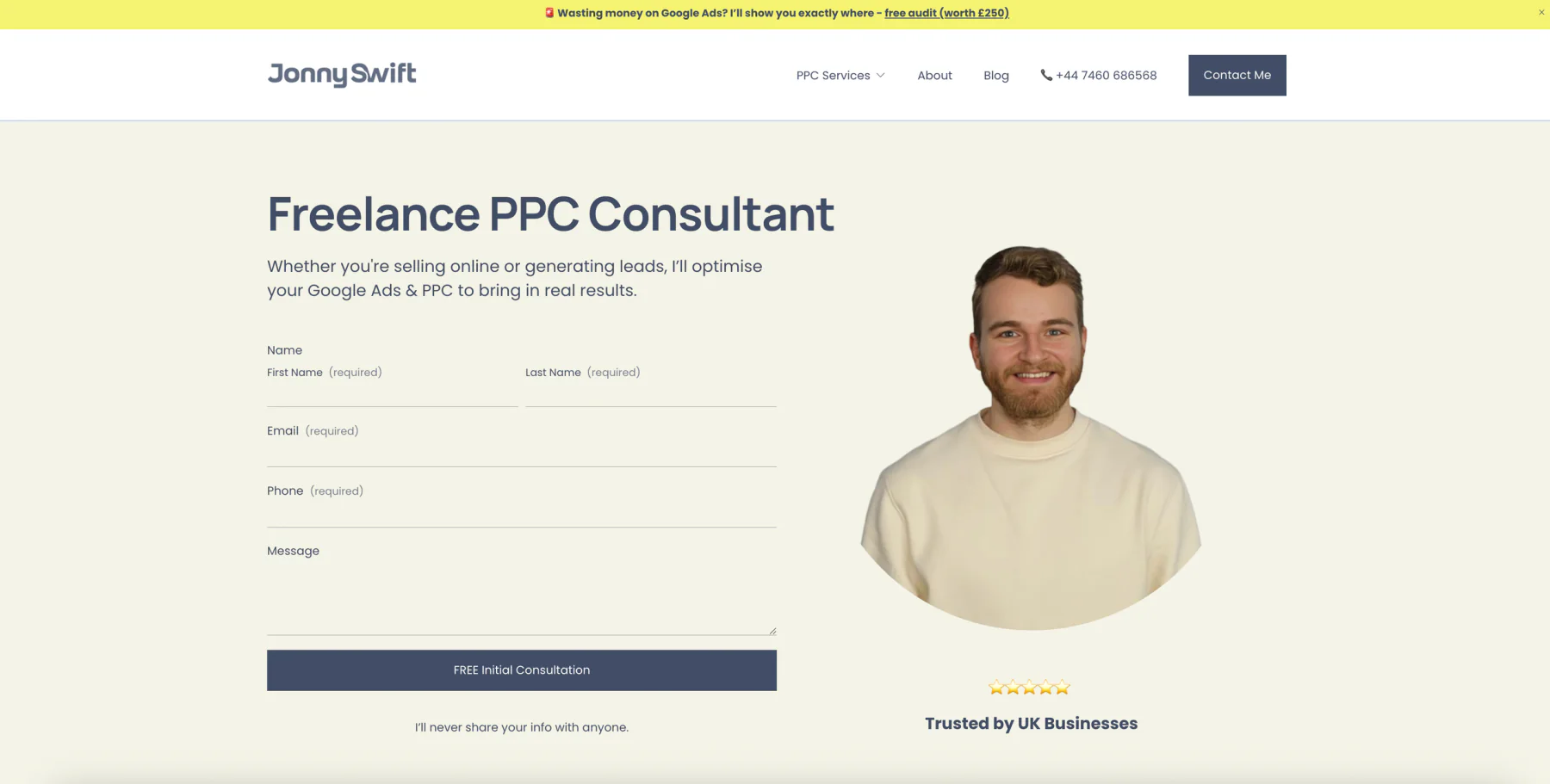
Examples of Landing Pages
Some common examples include:
Women’s sandals
Electric golf buggies
Wedding videography
Emergency plumbing services
PPC management services
Roofing services in Bournemouth
The more relevant the page is to the search, the better the user experience usually becomes.
What Is a Conversion?
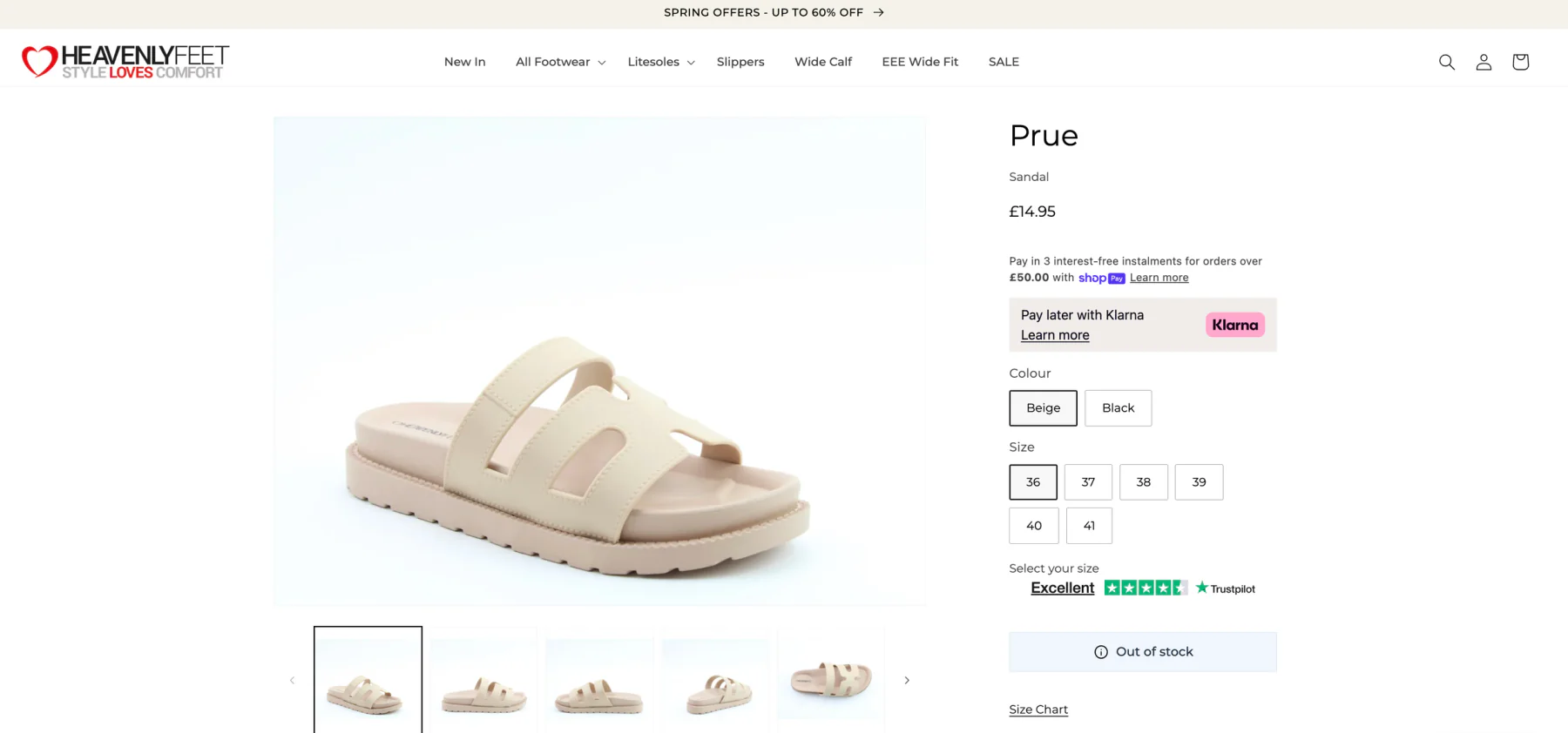
A conversion is basically a sale on your website.
If you make a sale, it counts as one conversion towards your overall website performance.
However, conversions are not always direct purchases.
For service businesses, a conversion could be:
An enquiry form submission
A phone call
A quote request
A booked consultation
Some businesses prefer to count leads as conversions, while others only track completed sales.
But to sum it up simply, a conversion is an action somebody takes on your website that you want them to complete.
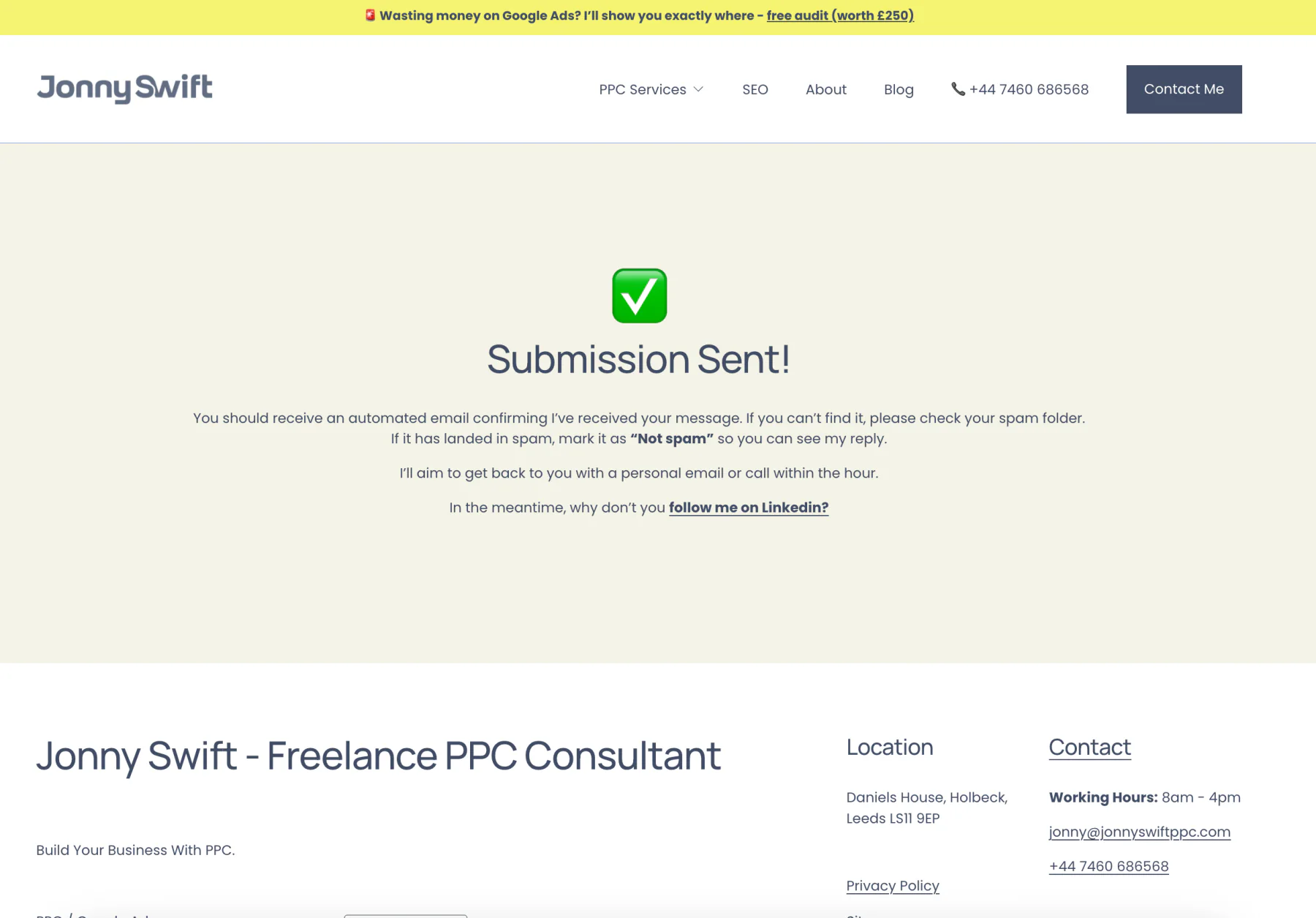
For example, I use a confirmation page to confirm an enquiry order.
What Counts as a Landing Page Conversion?
Now you know the difference between the two, it is time to talk about landing page conversions.
A landing page conversion is the action of somebody landing on a specific landing page and then eventually making a conversion.
For example:
A customer searches online for “comfortable women’s sandals”, lands directly on your sandals landing page, and then goes on to make a purchase.
That would count as a landing page conversion.
The reason this is important is because it allows you to measure the performance of that specific page rather than your entire website.
Landing Page Conversion vs Overall Website Conversion Rate
Your overall website conversion rate includes everything across the site, including:
Homepage traffic
Blog visitors
Informational pages
Product pages
Service pages
But a landing page conversion rate focuses purely on one page or category.
This helps you understand:
Which pages are performing well
Which pages need improvement
Which products or services customers respond best to
What type of landing pages you should create more of
This data becomes extremely useful when scaling SEO or PPC campaigns.
How to Calculate Landing Page Conversion Rate
Landing page conversion rate is calculated using this formula:

For example:
If you had 100 sales from 1,000 visitors, your conversion rate would be 10%.
With landing pages specifically, you only track people who landed on that particular page rather than the entire website.
Useful Tools for Tracking Conversion Rate
One of the best tools for tracking this is Google Analytics.
Once set up correctly, you can:
View landing page performance
Track key events
Measure purchases or enquiries
Monitor revenue
Analyse customer journeys
Inside GA4, you can look at metrics such as:
Session key event rate
Revenue
Engagement rate
Bounce rate
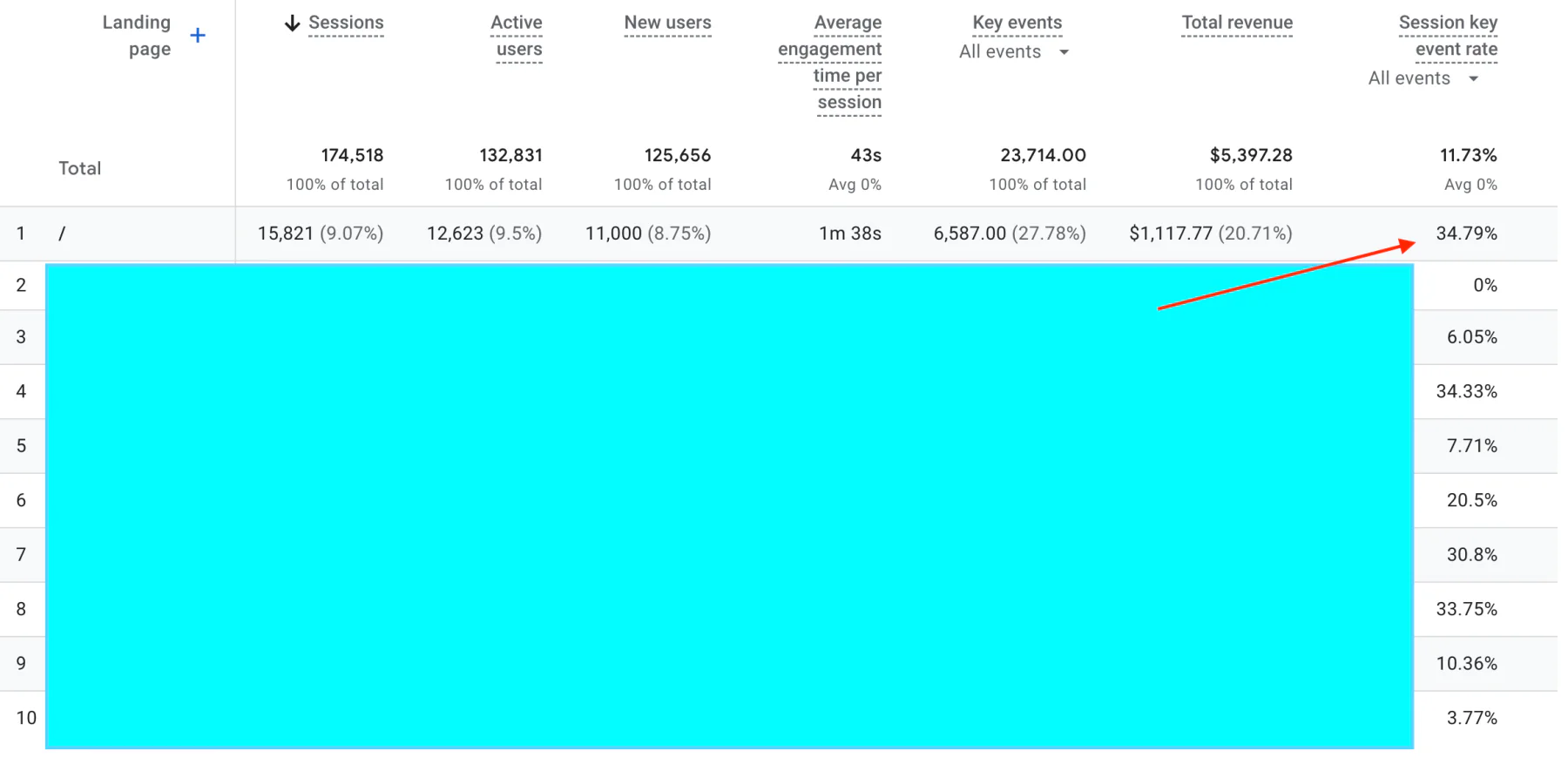
The session key event rate is especially useful because it shows how many users landed on a page and eventually completed a conversion.
If you need help setting this up correctly, it is something I can help with as part of improving your digital marketing performance.
What Should You See in the Stats?
Normally, landing page conversion rates are better than your overall website conversion rate.
The reason for this is because landing pages are highly targeted.
The user is normally searching for something very specific, finds exactly what they are looking for, and then decides whether to purchase or enquire.
Whereas overall website traffic can include:
Blog readers
Homepage visitors
Informational traffic
People researching products
Users without buying intent
This naturally lowers your overall conversion rate.
If Your Landing Pages Are Not Converting Well
If your landing pages are underperforming, I would look at a few key areas:
Check for Technical Issues
Use an SEO tool to identify:
Dead links
Slow page speed
Broken buttons
Mobile usability problems
Small technical issues can easily put potential customers off.
Go Through the Customer Journey
Try using the page as if you were the customer.
Ask yourself:
Is the page easy to understand?
Is the product or service clear?
Is it easy to buy?
Is there unnecessary friction?
Does the page load quickly?
Sometimes even minor frustrations can cause users to leave the website.
How to Improve Landing Page Conversion Rate
Improving landing page conversion rate is not always about making massive changes.
Usually, it comes down to making the experience clearer, faster, and more relevant.
Make the Page Highly Relevant
Your page title, headings, content, and USPs should all clearly match what the user is searching for.
For example, if somebody searches for:
“Electric golf buggy”
Then your page should clearly mention:
Electric golf buggy
Key product benefits
Delivery information
Warranty details
Product features
The more relevant the page feels, the more confidence the customer usually has.
Improve Trust Signals
People need reassurance before buying online.
Some useful trust signals include:
Reviews
Testimonials
Guarantees
Delivery information
Clear contact details
Secure checkout badges
These small additions can make a big difference.
Keep the Funnel Simple
Try to avoid unnecessary funnels.
A funnel is the journey somebody takes before making a purchase.
Ideally, you want the process to look something like this:
Landing page → Add to basket → Checkout
Simple works best.
If customers have to click through multiple unnecessary pages, wait for slow loading times, or search around for information, they are far more likely to leave.
Nothing is worse than making the customer wait.
Optimise for Mobile
A huge amount of users now browse on mobile devices.
Make sure your landing pages:
Load quickly
Look clean on mobile
Have readable text
Have simple navigation
Have easy-to-click buttons
A poor mobile experience can massively hurt conversion rate.
Final Thoughts
Landing page conversions are one of the most useful ways to measure how effective a specific product or service page is on your website.
Instead of looking at overall website performance, you can understand exactly which pages generate sales and leads and which ones need improving.
In most cases, highly relevant landing pages should convert better than general website traffic because users are searching for something more specific.
By improving relevance, simplifying the buying journey, increasing trust, and fixing technical issues, you can often improve conversion rates significantly over time.
If you're interested in professional digital marketing management or improving your website conversion rates, feel free to get in touch via my contact page at Jonny Swift PPC. I'd be happy to discuss how digital marketing can help grow your business.