

One thing that always surprises me is how many professionals don’t have their own website.
People put plenty of effort into their CV and LinkedIn profile, but a website often seems to be something they only consider once they’ve started a business. Even then, some people still don’t have one.
To be honest, I was in the same position two years ago.
I’ve now been running Jonny Swift PPC for just under two years. I originally created it as a side hustle, around six months before leaving my previous job.
Since then, the website has received thousands of clicks, and its search impressions have gone into the millions. It has given people another way to find me, including people who didn’t previously know who I was.
However, I don’t think you need those sorts of numbers for a website to be worthwhile.
Whether you’re looking for a better job, considering freelance work or simply want somewhere to show what you can do, here’s why I think having your own website makes sense.
1. It can help you stand out when applying for jobs
Let’s say you’ve found a role you really want.
The pay is better, the business looks interesting, and it feels like a good next step in your career. The problem is that plenty of other people probably think the same thing.
Everyone is trying to impress, and I imagine that after reading enough applications, people can become a bit CV-blind.
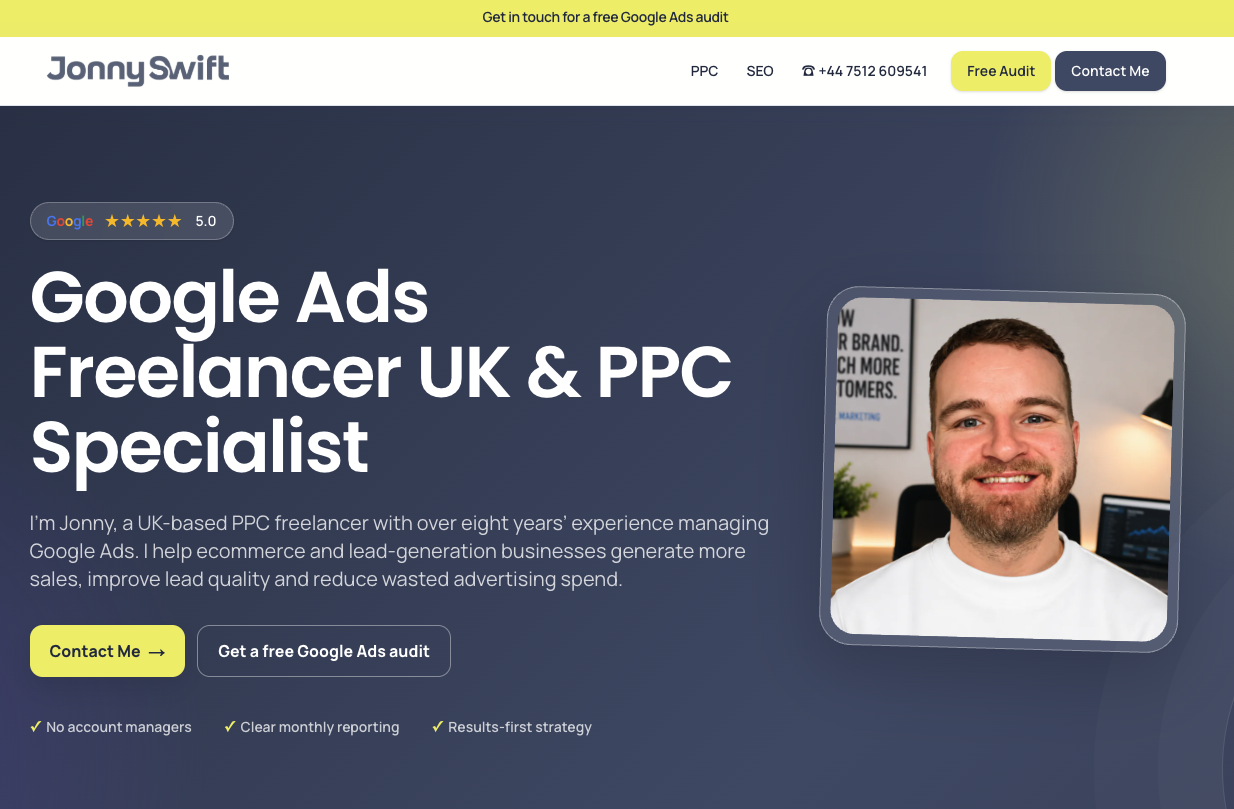
A personal website gives you something else to put in front of them.
You can show examples of your work, explain projects properly and give someone a better feel for how you think. There’s more room to demonstrate your abilities than there is in a PDF attached to an email.
It doesn’t need to be complicated either. A straightforward portfolio with an introduction, examples of your work and a way to contact you can give someone plenty to explore.
A website won’t guarantee you the job. But if it helps someone understand what you bring to the role, that’s a useful reason to have one.
2. It helps people find you when they search your name
At university, we were told to work on our LinkedIn profiles and improve our online presence.
At the time, I didn’t really appreciate how much that mattered. Now I understand it a lot more.
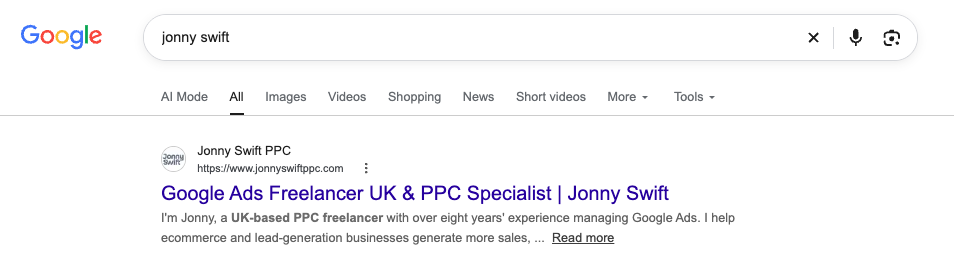
If someone hears your name through a recommendation, sees your job application or comes across something you’ve written, they may search for you on Google.
Having a website gives them somewhere to land that explains who you are and what you do.
When I first started, searching for my name wasn’t quite so straightforward. There’s also a musician called Jonny Swift, so I had a bit of competition (it’s been my aim for ages to overtake him — little does he know!).
Since improving my website and adding more content, I now see my own website appear first when I search for my name in my local area (take that, other Jonny Swift!).
Search results can vary, but I’m pleased that someone looking for me can now find my work, blog posts and services in one place.
Not bad at all. Hopefully my university tutor would be happy.
3. It gives people another way to find your services
LinkedIn is great for finding work and making connections. There are other ways to put yourself out there too, including YouTube and Substack.
I use YouTube as well. But having a website gives me another channel through which people can discover what I offer.
As a PPC freelancer, I want people looking for support to be able to find my services easily.
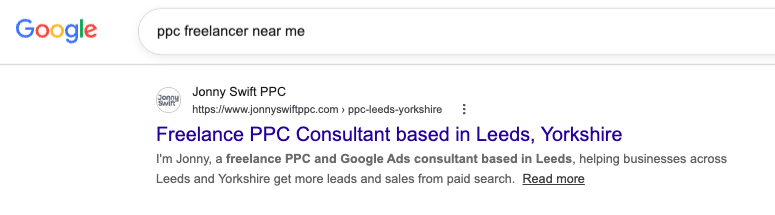
For example, when I search “PPC freelancer near me” locally, my Leeds and Yorkshire PPC page appears in the results.
Someone making that search doesn’t need to know my name already or happen to come across my LinkedIn profile. They can find the page, read about what I do and decide whether to get in touch.
Having a website can also affect whether someone wants to work with you in the first place.
I had a client who needed someone to help with a particular service. I asked around and found someone who looked great on LinkedIn. However, when the client realised they didn’t have a website, they told me they weren’t interested.
Very harsh, in my opinion. But some people do think this way.
For that client, having a website clearly mattered when deciding who to invest in. Your LinkedIn profile might look great, but a website can give someone that extra confidence to take the conversation further.
That’s particularly useful if you freelance or run a business. But it’s also worth thinking about if you’re considering a side hustle.
I created my website while I was still employed. You don’t have to wait until you’ve left a job to start putting your work online.
4. Creating a website has become much more accessible
One of the reasons I think more people should consider a website now is that there are so many ways to build one.
My original website was on Squarespace. More recently, I moved it to a custom website built with help from AI.
I’ve written about that process in why I rebuilt my Squarespace website with AI.
My current setup uses ChatGPT and Codex to help write and change the website code, GitHub to store it, and Cloudflare to get it online.
That’s the approach I use, but you don’t need to copy my setup to create a useful personal website.
For me, the cost and difficulty of getting started feel like much smaller barriers than they once did. There’s still work involved, especially when it comes to checking everything and getting it live, but a simple website is a very achievable place to start.
The main thing I’d recommend is making it personal to you.
Show your work, explain what interests you and write in your own words. Give someone a reason to remember the person behind the website.
5. You learn a lot from running one
One benefit I didn’t fully appreciate at the start was how much I would learn.
Through running and developing my website, I’ve learned about GitHub, Cloudflare and plenty of things involved in managing a website that I didn’t understand before.
I also help businesses improve the SEO on their websites. I thought I was good at that before, but running my own website has made me a hell of a lot better.
It’s given me a better understanding of other people’s points of view too. When it’s your own website, you care about how it looks, what it says and whether a change is actually worth making. Having that experience myself helps me understand the businesses I work with.
My current setup also makes parts of developing and updating the site more automated than they used to be.
The ideas and experiences behind the content still come from me. AI helps me organise my thoughts and prepare the work, but I’m writing about things I’ve done and opinions I actually hold.
Writing regularly has helped me improve my blog writing too. Explaining something clearly forces you to think about what you’re trying to say.
So even before looking at clicks, enquiries or job opportunities, there’s value in having something of your own to work on. I’m constantly learning through mine.
Why I think it’s worth starting
You don’t need to be a business owner to benefit from having a website.
It can give you somewhere to show your abilities, help people find you and support whatever comes next in your career. If you decide to freelance or launch a business later, you’ve already made a start.
Mine began as a side hustle while I was still in my previous job. Nearly two years later, it’s become an important part of how I present myself and my work.
You don’t have to start with a huge website or a busy blog. Start with who you are, what you do and a few examples of your work.
That alone gives you something useful to share.